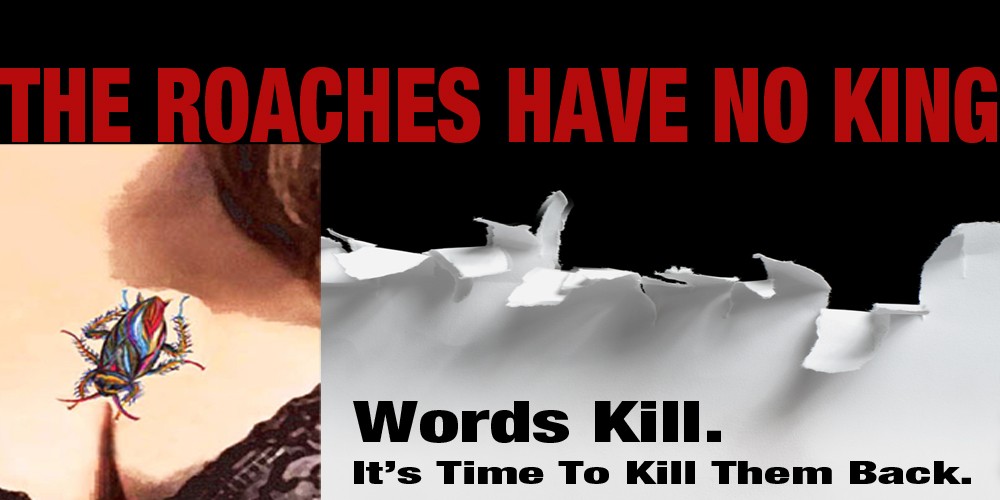

According to an article in the Huffington Post: “Cockroaches Good For Environment, Biologists Say”
“The sight of a cockroach makes just about every American shudder. We fear a roach infestation inside the walls. We fear that our house is dirty enough to sustain them. We fear that a cockroach might scurry across our faces at night, or, under cover of darkness, eat flecks of toothpaste off our toothbrushes.
“These fears drive us to kill, kill, kill, and wish death upon the whole genus. But what if cockroaches really were wiped out? Could we then rest easy?”
For one thing, it would mean extinction of some horrible species who feed on us. And more…
“Furthermore, the disappearance of cockroaches would mess with something truly vital for us all, called the nitrogen cycle. ‘Most cockroaches feed on decaying organic matter, which traps a lot of nitrogen,’ said Srini Kambhampati, professor and chair of the biology department at the University of Texas at Tyler, and a world expert on cockroaches. ‘Cockroach feeding has the effect of releasing that nitrogen (in their feces) which then gets into the soil and is used by plants. In other words, extinction of cockroaches would have a big impact on forest health and therefore indirectly on all the species that live there.'”
How would YOUR disappearance affect the health of forests, Homo sapiens? Ha!
 I recently had a talk with my nephew Huck Finn, who grew up eating through Mark Twain’s book. He was very upset. Because the “N-word” was no longer acceptable, he heard his ancestral home would be removed and replaced. What was worse, he didn’t know what “N-word” was. He had never come across it.
 There is a story in the Bible about the wisdom of Solomon. Two women came to him, both carrying newborns, one alive, one dead. Each woman claimed that the live baby was hers and that the dead was the other’s. Solomon ruled that the only equitable solution was to divide the living baby between the two women. One agreed. The other said, No! Don’t kill it. Give it to her. Whereupon Solomon decided that the second woman was the mother, because her love for the baby was greater than her need to possess it.


